


Views: 0 Author: Site Editor Publish Time: 2026-05-20 Origin: Site


Miscalculating the drying time of polyurethane foam causes severe project delays. It can lead to structural weaknesses and compromised insulation. You might inadvertently trap harmful off-gassing indoors or fail critical building inspections. Manufacturer labels often highlight incredibly "fast-drying" times on their packaging. However, project success requires distinguishing between surface-level drying and complete chemical curing. Rushing this critical window frequently causes costly rework. This guide breaks down exact timelines. We explore application dependencies and crucial safety benchmarks. You will learn how contractors and DIYers plan projects accurately. By understanding these variables, you can confidently schedule your work and avoid expensive application failures.
Tack-Free Time: Surface drying typically occurs within 5 to 15 minutes, allowing light contact without sticking.
Trimmable/Cuttable Time: The foam is usually stable enough to be cut, sanded, or shaped within 1 to 2 hours.
Full Cure Time: Complete structural hardening and VOC off-gassing requires a standard 24 hours, though environmental factors can extend this up to 48 hours.
Moisture Dependency: 1-component PU foam relies on ambient humidity to cure; dry environments will actively delay the process.
Contractors often confuse a dry surface for a cured product. This simple misunderstanding ruins projects. We must clearly separate these two distinct chemical phases. Treating them as identical concepts leads to structural failures.
The "dry" phase marks the initial surface-level chemical reaction. When you first apply the foam, it expands quickly. Within five to fifteen minutes, it forms a protective outer skin. This skin shields the expanding core underneath. At this stage, you can lightly touch the surface without it sticking to your fingers. We call this the tack-free phase. However, the foam remains incredibly fragile. It is absolutely not structurally sound yet. The interior remains wet, sticky, and actively expanding.
Curing represents the complete finish line. It marks the exact point where the exothermic chemical reaction reaches 100% completion. At this stage, the material achieves full polymerization. The foam has finally reached its maximum density. It has stabilized its final volume and locked in its permanent R-value. More importantly, chemical off-gassing has stabilized to safe, inert levels. The foam is now a rigid, permanent structure ready to bear weight or receive sealant.
Rushing the gap between dry and cure creates severe consequences. If you enclose the foam too early, it will shrink. It may even pull away completely from the substrate. This creates air leaks and defeats the purpose of insulation. In enclosed environments, premature sealing traps volatile organic compounds (VOCs). This creates severe toxic exposure risks. Patience during this phase prevents massive repair bills later.
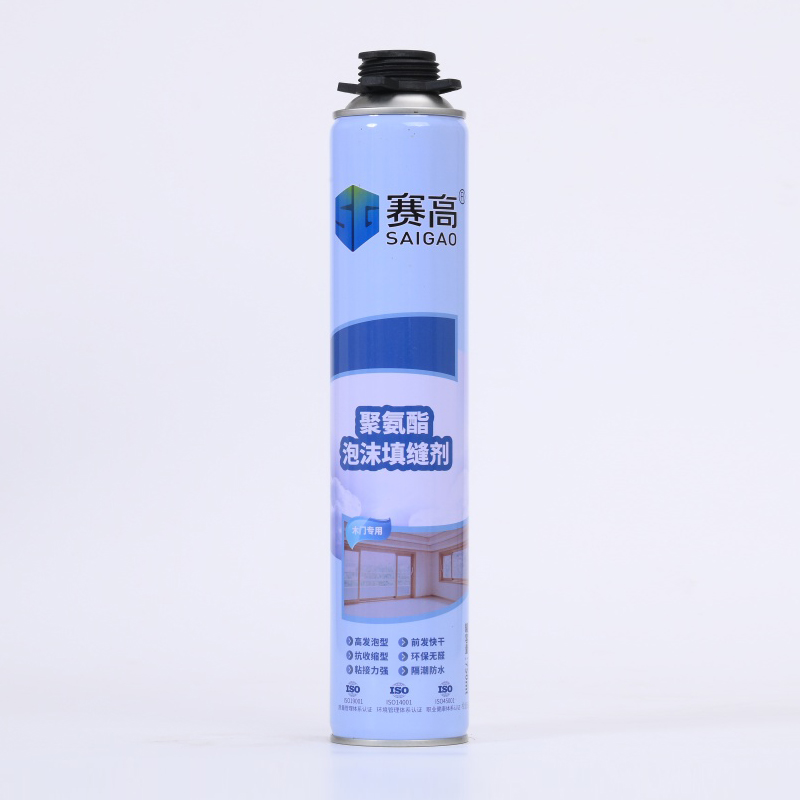
Not all foams cure at the exact same rate. The chemical composition dictates the speed of polymerization. We must understand how the differing densities among types of spray foam influence thermal mass. This directly affects cooling and curing timelines.
You will primarily encounter two chemical systems on the market. They behave very differently during application.
1K PU Foam (Canned/Retail): This represents the standard canned product found in hardware stores. It relies entirely on atmospheric moisture to cure. Because it pulls humidity from the air, it is a much slower process. The standard 24-hour cure rule applies strictly here. You cannot rush it.
2K PU Foam (Industrial/Rig Systems): Professionals use these systems for large installations. They cure via an immediate chemical mix of isocyanate and polyol resin at the nozzle. Because they do not rely on air moisture, they cure rapidly. The material often becomes fully structural within minutes to a few hours.
Cellular structure also impacts drying time. Open-cell foam expands massively and quickly. It holds less thermal mass, allowing it to cool and stabilize faster. Closed-cell foam is much denser. It creates a higher exothermic heat reaction. Because it traps heat inside rigid cells, it takes longer to cool down and fully cure. You must account for this trapped heat when spraying thick layers.
Drying and Curing Timeline Chart | ||||
Foam System | Tack-Free Time | Trimmable Time | Full Cure Time | Primary Catalyst |
|---|---|---|---|---|
1K Canned Foam | 5 - 15 minutes | 1 - 2 hours | 24 hours | Air Moisture |
2K Professional Rig | 30 - 60 seconds | 5 - 15 minutes | 12 - 24 hours | Chemical Mixing |
Open-Cell Insulation | 10 - 20 seconds | 15 minutes | 24 hours | Chemical & Cooling |
Closed-Cell Insulation | 15 - 30 seconds | 30 minutes | 24 - 48 hours | Chemical & Heat Dissipation |
Your work environment dictates your success. You cannot force a fast cure in terrible conditions. A successful spray foam insulation process requires careful monitoring of humidity, temperature, and application depth. Ignoring these variables leads to catastrophic material failure.
Unlike traditional building adhesives, most residential foams need moisture to activate. Single-component foams essentially drink humidity from the air. Extremely dry climates actively stall the curing phase. If you work in an arid environment, you must manually intervene. Misting the area lightly with a water bottle provides the necessary catalyst. Without moisture, the core will remain liquid for days.
Temperature controls the speed of the chemical reaction. Both the ambient air and the substrate surface matter greatly.
Optimal Conditions: The best curing typically occurs between 60°F and 80°F (15°C–27°C). The reaction proceeds predictably and safely.
Cold Conditions: Cold temperatures slow the reaction down. The foam becomes highly brittle. It will not expand fully, and the cure time drastically extends.
Hot Conditions: High heat accelerates expansion but can cause the outer skin to split. It traps excess exothermic heat inside the core.
Many beginners make the mistake of over-applying. Spraying too much product in a single heavy pass is dangerous. It prevents ambient moisture from reaching the center of the bead. This results in a "wet core" that may never properly cure. The exterior looks perfectly dry, but the inside remains a sticky liquid. When this happens, the entire structure eventually collapses inward.
You can control the outcome by following precise installation steps. Knowing exactly how to use PU foam spray eliminates the guesswork. Proper technique ensures you never deal with a collapsed core or delayed timeline.
Preparation guarantees strong adhesion. Ensure your substrates are totally clean. Remove all dust, grease, and loose debris. If you are using a standard 1K system, lightly mist the application area with clean water. This thin layer of water triggers the curing catalyst immediately upon contact. You will see much faster, more uniform expansion.
Deep cavities require a strategic approach. Never fill a deep hole all at once. Instead, utilize the step-pour method. This ensures moisture reaches every inch of the PU foam spray.
Spray the first layer: Apply a moderate bead roughly 1 to 1.5 inches thick at the base of the cavity.
Mist lightly: Give this new layer a very brief misting of water to promote curing.
Wait for tack-free status: Let it sit for 10 to 15 minutes. Touch it gently to ensure the outer skin has formed.
Apply the next layer: Once the first layer is stable, spray the next 1.5-inch bead directly on top.
Repeat as needed: Continue this process until the cavity is adequately filled. Leave room for final expansion.
Once you finish spraying, step away. You should never disturb, compress, or push the foam while it actively expands. Messing with it ruptures the delicate cellular structure. If you poke it, the foam will deflate like a popped balloon. It loses all insulating value and structural strength. Let it grow naturally. You can easily cut away the excess later once it reaches the fully cured stage.
Curing is not just about structural readiness. It is heavily tied to human and animal safety. Active chemical reactions release gases that require strict management.
We must address the critical hazard window. During the initial 24 hours, the foam actively releases volatile organic compounds (VOCs). These fumes are toxic if inhaled in high concentrations. Access to enclosed spaces should be strictly restricted for 24 to 48 hours. Wait until full polymerization completely stops the release of gases. Always maintain aggressive ventilation during this waiting period.
Many hobbyists utilize polyurethane for live-animal habitats or aquascaping. This requires extreme caution. Animals possess highly sensitive respiratory systems. For these applications, highlight the absolute necessity of waiting up to 72 hours. Perform a thorough smell test. If you detect any chemical odor, the foam is still off-gassing. Ensure zero residual toxicity before introducing any living creatures into the enclosure.
Cured foam remains vulnerable to environmental damage. It degrades rapidly under direct UV light, turning orange and crumbling into dust. You must protect it. However, wait a full 24 hours before applying protective coatings, sealants, or exterior paint. Painting over uncured foam traps solvents and halts the chemical process. Once fully hardened, it accepts latex and acrylic paints beautifully.
Predicting the exact timeline ensures your project stays safe and structurally sound. You must always base your project timeline on the 24-hour full-cure rule. Never rely solely on the 15-minute tack-free marketing claim printed on the can. Surface dryness does not equal structural readiness. Always account for local humidity and ambient temperatures before you start spraying.
For minor household fixes, standard 1K cans are perfectly sufficient if you layer them correctly. Mist the area, use the step-pour method, and practice patience. For high-volume insulation where timelines remain strict, consider upgrading to a 2K system. Hiring a professional contractor ensures immediate curing, guaranteed compliance, and zero structural collapse. By respecting the chemical process, you guarantee an airtight, permanent seal every single time.
A: Yes. For 1-component foams, lightly misting the application area with water before and after spraying accelerates the moisture-curing process. Do not soak the area; a fine mist is all the chemical reaction needs to activate faster.
A: Cutting it prematurely releases the unreacted chemicals hidden in the core. This causes the entire foam structure to collapse and shrink. It will permanently lose both its adhesive grip and its thermal insulating properties.
A: Yes. Cold temperatures significantly reduce the chemical reaction rate. This leads to lower expansion volumes, much longer drying times, and reduced overall foam density. Always aim for ambient temperatures above 60°F.
A: Once fully cured (typically after 24 to 48 hours), it is chemically inert, non-toxic, and safe for long-term residential use. However, it remains highly flammable unless it is properly treated with or covered by an approved fire barrier.

