


Views: 0 Author: Site Editor Publish Time: 2026-05-27 Origin: Site


Polyurethane (PU) foam remains an absolute staple in modern construction and weatherization projects. Yet, selecting the wrong chemical mix or expansion rate often leads to disastrous structural damage. Contractors and builders frequently face a tough dilemma when choosing these powerful sealants. Applying the wrong cell structure can trap moisture, warp expensive door frames, or fail strict safety compliance checks. This problem matters deeply because fixing these application errors requires costly mechanical removal, significant project delays, and immense frustration.
We move beyond basic definitions to give you a highly practical evaluation framework. You will learn how to accurately match specific foam properties to your exact project scope. We also cover essential safety measures and application guidelines to ensure perfect results every time you pull the trigger.
PU foam spray is primarily evaluated on its expansion ratio and cell structure (open vs. closed), which dictate its use as an insulator, gap filler, or moisture barrier.
Choosing between 1-component (1K) and 2-component (2K) systems depends strictly on project scale, yield requirements, and curing speed.
Improper application without accounting for ambient temperature, humidity, and chemical off-gassing (isocyanates) introduces severe safety and structural risks.
Understanding how polyurethane functions at a molecular level separates amateur applications from professional installations. The performance of any foam product relies entirely on a specific chemical reaction taking place the moment the material leaves the nozzle.
At its core, polyurethane foam forms through a rapid chemical reaction between two primary ingredients: a polyol resin and a polymeric isocyanate. When these two chemicals mix, they create an immediate exothermic reaction. This chemical process generates heat, forcing the liquid mixture to vaporize and expand into a cellular foam matrix. In commercial 2-component systems, these chemicals remain isolated in separate tanks until they meet in the application gun. In 1-component canned systems, they exist as a prepolymer mixed with a propellant, relying on ambient moisture in the air to trigger the final curing phase.
This exothermic reaction drives the material's expansion dynamics. Depending on the exact chemical formulation, the liquid can expand anywhere from 30 to 60 times its original volume. The foam aggressively seeks out the path of least resistance, pushing into microscopic crevices, wrapping around plumbing lines, and sealing porous substrates. Once fully expanded, the material rapidly cools and solidifies into a rigid or semi-rigid state. You must respect this dynamic shift from a flowing liquid to a dense solid to prevent severe application errors.
Understanding this expansion mechanism remains critical for predicting post-cure volume. Predicting this volume prevents massive material waste and avoids catastrophic structural bowing. If you inject a highly expansive foam into a closed, low-tolerance cavity—like the space around a delicate window jamb—the curing pressure can physically bend the wood or vinyl frame out of alignment. Evaluating a project through the lens of expansion dynamics ensures you select the correct low-expansion or high-expansion product for the specific cavity.
Professionals utilize different foam configurations to solve vastly different building challenges. Matching the specific material traits to your project requirements guarantees optimal performance.
A high-quality Versatile Polyurethane Foam Spray for Insulation and Sealing acts as a foundational barrier against energy loss. Traditional fiberglass batts often leave microscopic gaps, allowing heat to escape. Polyurethane foam stops heat transfer at critical junctions perfectly. Installers frequently use it around HVAC penetrations, complex roof decks, and uninsulated rim joists to eliminate thermal bridging entirely. Beyond basic R-value, this foam delivers unmatched air sealing efficacy. It conforms to highly irregular geometries, bonding tightly to wood, concrete, and metal. This creates a continuous, monolithic building envelope blocking drafts permanently.
When dealing with larger voids, technicians rely on Pu Foam Spray for Gap Filling Use to reestablish structural integrity. High-density gap-filling foams excel at draft and pest exclusion. By injecting this material into deep foundation cracks, oversized plumbing penetrations, and awkward wall junctions, you block physical entry points for rodents and insects. Furthermore, this heavy-duty material provides substantial structural void filling. It stabilizes loose pipes, reduces mechanical vibrations from machinery, and prevents destructive moisture accumulation inside localized wall gaps.
Polyurethane acts as a highly effective acoustic boundary when specified correctly. Building engineers look closely at Sound Transmission Class (STC) ratings when designing modern interiors. Lighter, less dense foams mitigate airborne noises like voices or music, while denser foams help dampen physical impact noise passing through walls. Additionally, specific foam profiles serve as phenomenal vapor retarders. Closed-cell variations naturally resist water absorption, making them a primary choice for achieving FEMA-approved flood resistance and strict vapor barrier code requirements in high-humidity zones.
Choosing between open-cell and closed-cell chemistry represents the most critical decision in any insulation project. Making the wrong choice often leads to trapped moisture or insufficient thermal resistance.
Open-cell foam gets its name because the tiny cell bubbles inside the material break open during the expansion process. This results in a softer, sponge-like material weighing roughly half a pound per cubic foot.
Best for: Interior wall cavities, dedicated soundproofing, and budget-conscious insulation projects where deep framing space permits thicker application.
Limitations: It provides a lower R-value per inch (typically R-3.5 to R-4) compared to denser alternatives. Crucially, it remains permeable to vapor. You must install a separate vapor barrier if using open-cell foam in moisture-prone exterior walls.
Closed-cell foam retains its microscopic bubbles intact, creating a highly dense, rigid plastic structure weighing about two pounds per cubic foot.
Best for: Exterior applications, high R-value requirements in shallow framing cavities (delivering R-6 to R-7 per inch), structural reinforcement, and rigorous waterproofing.
Limitations: It carries a significantly higher upfront material cost. Furthermore, its rigid nature makes it slightly less forgiving to natural building shifts over time.
Contractors must also decide between 1-component (1K) and 2-component (2K) delivery systems. Single-can 1K systems rely on ambient moisture to cure, offer relatively low yield, and work perfectly for minor touch-ups or small gap sealing. Conversely, dual-tank 2K kits utilize a forced chemical cure independent of air moisture. These robust kits deliver massive high-yield coverage and commercial scalability needed for entire wall assemblies or roof decks.
Feature | Open-Cell Foam | Closed-Cell Foam |
|---|---|---|
Density | ~0.5 lbs per cubic foot | ~2.0 lbs per cubic foot |
R-Value (per inch) | R-3.5 to R-4.0 | R-6.0 to R-7.0 |
Water Resistance | Permeable (Absorbs moisture) | Waterproof (Acts as vapor barrier) |
Structural Rigidity | Flexible / Soft | Highly Rigid / Adds structural strength |
Primary Use Case | Interior soundproofing, deep cavities | Exterior envelopes, shallow cavities |
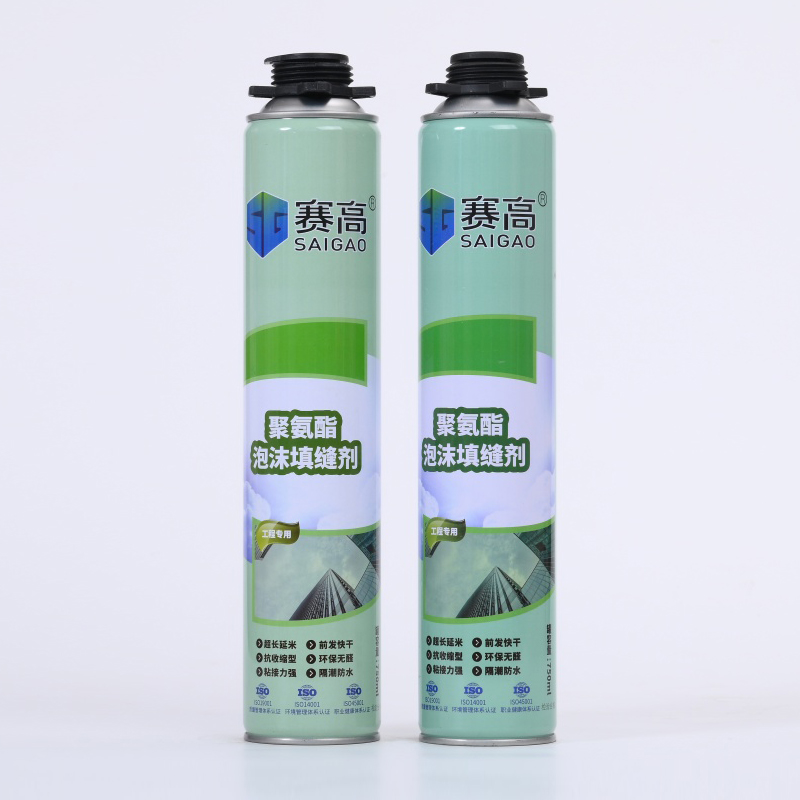
Even the highest-grade PU foam spray fails if installed under incorrect environmental conditions. Mastering implementation realities separates successful projects from costly reworks.
Chemical curing relies heavily on specific environmental conditions. Ambient temperature, substrate temperature, and relative humidity drastically alter both curing times and final expansion rates. Most manufacturers recommend an ambient application temperature between 60°F and 80°F. If the air or substrate falls below these thresholds, the material may shrink, lose its adhesive properties, or fail to achieve its intended yield. High humidity speeds up 1K foam curing but can cause moisture-trapping issues for chemical-cured 2K systems.
Over-application poses a constant threat on tight jobsites. The bowing risk occurs when installers misjudge a cavity's volume or use a highly expansive foam in low-tolerance areas. Spraying standard expansion foam around window jambs, door frames, or thin-walled plumbing cavities generates immense outward pressure during the cure. This pressure easily bows wooden studs and crushes vinyl frames, leading to completely jammed doors and expensive structural rework.
Proper adhesion requires a meticulously prepared surface. You cannot simply spray over dirty, oily framing.
Clean the Surface: Mechanically remove all loose debris, sawdust, and peeling paint.
Degrease: Wipe away heavy oils or industrial lubricants using a compatible solvent.
Mist (For 1K only): Because 1K foam requires ambient moisture to cure effectively, lightly misting the clean substrate with water dramatically improves adhesion and speeds up the cell-locking process. Skip this misting step entirely for 2K systems.
Polyurethane chemicals demand deep respect. Navigating health risks and building codes ensures you protect your crew and pass final inspections.
The EPA strictly monitors polyurethane applications due to the aerosolized chemicals involved. Isocyanates, a primary curing agent, present serious health risks during the spraying phase. Inhaling these vapors can trigger severe occupational asthma, respiratory sensitization, and acute eye irritation. You must mandate strict Personal Protective Equipment (PPE) requirements on every job. Workers need full-face supplied-air respirators, heavy-duty dermal protection, nitrile gloves, and disposable chemical suits to prevent dangerous physical contact.
Safety protocols extend long after you turn off the spray gun. As the foam cures, it undergoes a chemical off-gassing process. You must follow realistic re-occupancy guidelines based on established industry standards. For most large-scale 2K applications, safety frameworks dictate a strict 24-hour vacancy rule. Nobody without proper PPE should enter the workspace until the foam fully off-gasses and solidifies.
You must clearly understand local fire safety ratings. Standard foams remain highly combustible. You will encounter "Fireblock" or intumescent variants designed to resist flame spread in small penetrations. However, building codes generally mandate that all broad, exposed foam surfaces inside habitable spaces require an approved thermal barrier. Covering the cured foam with half-inch drywall or a certified intumescent coating protects the highly flammable plastic core from immediate ignition during a house fire.
Buying the correct material requires strategic planning. Following a strict procurement checklist guarantees you secure sufficient material without risking chemical degradation in storage.
Never take the manufacturer's theoretical maximum coverage at face value. Evaluate material based on calculated yield verification, usually measured in board feet (one square foot at one inch thick). Actual coverage frequently falls 10% to 20% short of the theoretical maximum due to complex framing geometries, suboptimal jobsite temperatures, and slight application overlaps. Always order slightly more material than your strict square-footage calculations dictate.
Polyurethane chemicals possess a finite shelf life. Most closed commercial kits degrade within 12 to 18 months of manufacturing. Factoring in expiration dates prevents you from spraying dead chemicals that refuse to cure. Additionally, temperature-controlled storage remains an absolute requirement. Freezing temperatures permanently separate the chemical components, while extreme heat accelerates internal pressure, potentially rupturing the canisters.
Before committing to a massive bulk order, conduct a small-scale adhesion and expansion test on your specific jobsite materials. Spray a single test patch to observe the true cure time and expansion aggression. If you plan to order commercial-grade 2K rigs, consult directly with a technical representative. They will help calibrate your spray equipment to match the specific viscosity of the purchased foam.
Polyurethane foam spray rarely serves as a universal, one-size-fits-all product. Choosing the wrong configuration severely jeopardizes building integrity, wastes project budgets, and creates immediate safety hazards.
Successful deployment completely relies on matching the foam’s specific physical properties—such as its cell structure, density, and expansion rate—to the exact environmental and structural demands of your current project. Taking time to evaluate the application site ensures you apply a permanent, effective seal.
Take action today by requesting a technical data sheet (TDS) for your preferred product. Calculate your required project volume in board feet, and contact a certified specialist to ensure correct system sizing before your next installation.
A: Open-cell foam is somewhat water-resistant but remains permeable, meaning it absorbs and allows moisture vapor to pass through. Closed-cell foam is completely waterproof and acts as a rigid vapor barrier, aggressively blocking liquid water and humidity from penetrating the building envelope.
A: When installed correctly and protected from direct sunlight, cured polyurethane foam lasts indefinitely. However, UV rays rapidly degrade exposed foam, turning it brittle and powdery. You must cover it with paint, drywall, or siding to ensure lifetime performance.
A: Cured foam resists almost all chemical solvents. You must remove it mechanically using saws, scrapers, or stiff wire brushes. Because mechanical removal proves incredibly difficult and time-consuming, preventing over-application remains far easier than attempting post-cure cleanup.
A: Yes, it is safe once entirely cured. You must enforce strict ventilation during the initial 24-hour curing and off-gassing phase. Additionally, building codes require you to cover all exposed indoor foam with an approved thermal barrier, like drywall, to maintain strict fire safety standards.

