


Views: 0 Author: Site Editor Publish Time: 2026-08-29 Origin: Site


Accurate estimation of polyurethane (PU) foam requirements is critical for any construction or sealing job. You need reliable data to control material costs. You also need precise estimates to protect project margins from shrinking. Relying solely on the "theoretical yield" printed on a canister often leads to frustration. It frequently causes material shortages midway through a job. It can also trigger unexpected budget overruns. Real-world application variables quickly alter how much usable product you extract from a single can.
Establishing a standardized calculation framework solves this persistent problem. An evidence-based approach helps you determine exact purchasing needs. It accounts for fluid dynamics, foam density, and expansion rates. It also factors in harsh environmental conditions on the job site. By analyzing these details, you prevent costly procurement mistakes. In this guide, we will explore the core metrics behind accurate volume estimation. You will learn how formula variations alter your expectations. We will walk through a step-by-step yield calculation method. Finally, you will discover hidden site variables and vendor selection strategies that protect your bottom line.
Yield vs. Coverage: A standard 750ml can typically yields 35 to 45 liters of expanded foam, translating to specific linear or volumetric coverage depending on bead size and cavity depth.
Expansion Types Matter: High expansion PU foam maximizes volume for large voids, while gap filling PU foam prioritizes controlled expansion to prevent substrate warping.
Environmental Impact: Ambient temperature, can temperature, and ambient humidity can swing practical yield by up to 25%.
Vendor Evaluation: When sourcing OEM PU foam spray, consistent propellant-to-prepolymer ratios dictate whether bulk purchases actually deliver the promised ROI.
You cannot manage what you do not accurately measure. This rule applies heavily to construction adhesives and sealants. Estimating true PU foam coverage requires understanding several fundamental industry metrics. These baselines guide every purchasing decision.
First, we must define the difference between Free Expanded Volume and Linear Yield. Free Expanded Volume is a laboratory metric. It measures the raw chemical expansion in liters. It simply tells you how much space the foam takes up in an unconfined environment. Linear Yield is completely different. It is a highly practical metric. It measures the usable distance in meters or feet. Contractors care most about linear yield. It dictates exactly how many door frames or window sills they can seal per can.
How do we standardize these measurements? We use a continuous bead metric. A standard bead is often measured as a 20mm x 20mm line. In North America, many use a 1-inch x 1-inch bead as their baseline. This standard provides a fixed reference point. Without a uniform bead size, estimating job site needs becomes impossible. Applying a thicker bead will instantly reduce your linear yield. Applying a thinner bead will stretch your coverage further.
Understanding the gap between laboratory claims and field reality is crucial. Here is how they differ:
Theoretical Yield: This number comes directly from perfect lab conditions. Testing typically happens at 20°C (68°F). It also requires exactly 60% relative humidity. Under these conditions, the foam achieves maximum expansion and zero waste.
Practical Yield: Job sites are chaotic and unpredictable. Practical yield is the actual usable coverage you get on site. You must always factor in a standard 10% to 15% application loss. This waste rate accounts for overspray, trimming, and human error.
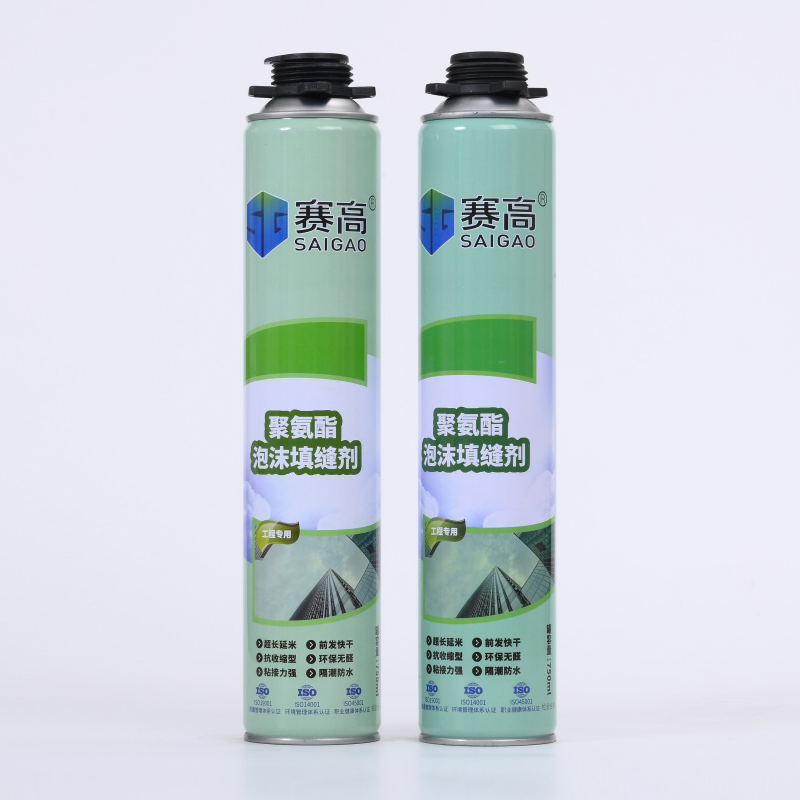
Chemical composition changes everything about how a product behaves. Not all foams expand identically. You must choose the right chemistry for your specific void type. Choosing the wrong formula will drastically impact your coverage rates.
Some projects require precision over sheer volume. These formulas feature a low-to-medium expansion rate. They typically expand 1.5x to 2x their original extruded volume. We use them primarily for delicate door and window framing.
This formula type provides a lower total volume per can. However, the linear yield is highly predictable. It cures smoothly and creates very little excess material. You spend less time cutting away overflow. This makes gap filling PU foam extremely cost-effective for precise installations where substrate warping is a major concern.
Other projects demand maximum volume to fill massive cavities quickly. These formulas deliver exceptional expansion rates. They routinely expand 3x to 5x their extruded volume. Common use cases include sealing large wall penetrations. They also work perfectly for structural voids and plumbing chases.
The coverage impact here is massive. You achieve a much higher total expanded volume from a single canister. However, it requires precise application techniques. Poor technique causes aggressive over-expansion. This creates heavy trimming loss and wasted product. While high expansion PU foam is highly efficient, it demands an experienced hand to maximize its true yield potential.
Formula Application Outcomes
Foam Type | Expansion Rate | Primary Use Case | Trimming Waste Risk |
|---|---|---|---|
Gap Filling Formula | 1.5x to 2x | Doors and window frames | Low |
High Expansion Formula | 3x to 5x | Large penetrations and voids | Moderate to High |
Guesswork has no place in construction procurement. Estimating requires a structured, mathematical approach. Follow these four distinct steps to calculate your exact unit needs accurately.
Determine the Cavity Volume: You must measure the void accurately first. The formula is straightforward. Multiply the width by the depth by the length of the gap. This calculation gives you the total cubic volume of the empty space. Precise measurements here prevent you from under-ordering materials.
Convert Canister Output to Linear Measurement: Start with an industry baseline example. A standard 750ml can often yields roughly 40 liters of expanded foam. This volume equals roughly 2,440 cubic inches. If you lay down a standard 1-inch by 1-inch bead, the calculation provides approximately 30 to 35 linear meters. This translates to roughly 100 to 115 linear feet. This conversion turns liquid volume into a usable distance metric.
Apply the Waste Factor (The Realistic Buffer): Theoretical numbers are dangerous if taken literally. You must build a realistic buffer into your math. Multiply your theoretical yield by 0.85. This simple step accounts for a standard 15% job site loss. Loss inevitably comes from overspray. It comes from trimming hardened excess. It also comes from residual chemicals trapped inside the discarded canister.
Scale for the Project: You now hold the true practical yield per can. Take your total required project volume. Divide it by this practical unit yield. The final result represents your exact purchasing requirement. This simple division prevents massive budget overruns.
A perfect calculation still fails if execution is flawed. Many environmental factors sabotage your estimates on the ground. Recognizing these hidden risks is essential for maintaining your projected coverage.
Temperature dictates chemical performance. Cold chemical temperatures ruin the curing reaction. They instantly increase product density. They drastically reduce the final expansion volume. You must proactively condition your materials. Always store and bring your cans to an optimal 20°C (68°F) before use. Spraying cold foam guarantees a massive drop in coverage.
Polyurethane foam is a moisture-curing product. It physically relies on water vapor in the air to expand properly. Arid environments pose a significant risk to your yield. A lack of ambient moisture stalls the expansion process. It severely reduces your overall coverage. You should always mist the substrate lightly with water. This accelerates curing and maximizes cellular expansion.
The human element matters deeply. Dispensing speed alters the bead thickness dramatically. Moving too slowly deposits excessive material. Equipment calibration is equally vital. A professional metal foam gun offers precise flow control. Conversely, a basic plastic straw applicator increases waste significantly. Consistent, trained technique stabilizes your coverage rates across the entire job.
Material shelf life impacts site performance. Expired products quickly lose their chemical effectiveness. Furthermore, poorly stored PU foam spray suffers from gradual propellant loss. Without adequate internal pressure, the extraction volume drops sharply. You leave valuable product stuck inside the can. Always check expiration dates and maintain optimal warehouse temperatures.
Always conduct a small test spray to check bead consistency before filling critical gaps.
Keep an ambient thermometer on site to monitor temperature fluctuations during winter months.
Train your crew on proper gun adjustment dials to prevent accidental over-dispensing.
Large commercial projects require bulk procurement strategies. You must evaluate manufacturers carefully to protect your budget and ensure reliable performance.
Do not trust flashy marketing claims blindly. These numbers are often highly exaggerated. Commercial buyers must evaluate the Technical Data Sheets (TDS) instead. The TDS provides factual, third-party lab results. It reveals the true chemical potential and density of the foam. It separates reliable products from cheap substitutes.
Reliable coverage demands chemical stability. You need consistent propellant-to-prepolymer blends in every single canister. Variations from one pallet to the next destroy your project estimates. Stable manufacturing blends ensure predictability. This guarantees your mathematical calculations hold up across massive orders.
Standard products sometimes fall short of specialized needs. Partnering directly with an OEM PU foam spray manufacturer offers a distinct advantage. You can request specific tweaks to the viscosity. You can customize expansion rates for unique void sizes. This flexibility is ideal for highly specific, repetitive tasks. Prefabricated housing manufacturers benefit greatly from custom formulas designed for their exact framing dimensions.
Procurement teams often focus solely on the raw unit price. This is a common and expensive mistake. You need a better evaluation framework. You should calculate your return on investment based on expanded volume. A cheap can might yield very little usable foam. A premium can usually provides superior coverage and lower trimming waste. Focus your purchasing decisions entirely on the true cost-per-yield metric.
Calculating true coverage requires moving beyond basic label claims. You must account for the specific foam type required. You need precise joint dimensions before running the math. You also must actively manage environmental realities like temperature and moisture on your job site.
We encourage procurement teams to be proactive. Site managers should run physical test applications before starting. Treat these exercises as job site mock-ups. They help you establish a reliable, proven practical yield. Do this consistently before placing massive bulk orders with any new supplier.
Take action today to protect your budgets. Review detailed TDS documents from your current suppliers. Request technical product samples for field testing. Incorporate standard waste buffers into your daily estimates to ensure you never run short on crucial materials.
A: Coverage depends heavily on your bead size. A standard 750ml can typically provides roughly 115 linear feet when dispensing a standard 1/2-inch bead. However, you must always subtract a 15% waste factor to find your true practical yield for job site estimates.
A: No. Cold application significantly reduces yield and increases density. However, this effect is not permanent before application. By bringing the chilled can back to an optimal room temperature of 20°C (68°F) before spraying, you can fully restore the expected expansion rate.
A: Several factors cause this volume drop. Insufficient ambient humidity stalls the curing process. Cold can temperatures prevent the chemicals from expanding fully. Additionally, aggressive application techniques can collapse the delicate cellular structure before the foam fully cures.
A: Start with a Volumetric Calculation of your total gaps. Convert the can's output into a Practical Yield by subtracting a 15% waste factor. Finally, divide your total project volume by this practical unit output formula to find your exact can requirement.

