


Views: 0 Author: Site Editor Publish Time: 2026-08-24 Origin: Site


Adhesive failure ruins perfectly crafted furniture. Delamination, stubborn fabric staining, and sudden foam collapse cost manufacturing shops thousands of dollars daily. Choosing the right product involves far more than simply testing its initial tackiness. You must carefully balance substrate compatibility, your factory environment, and strict chemical safety regulations. Using standard glue on high-tension fabric often guarantees disaster down the line.
We created this guide to provide a clear, technical framework. You will learn how to evaluate and shortlist the ideal spray adhesive for upholstery based on empirical performance data. We will explore substrate matching, open time adjustability, and production scalability. Whether managing a small restoration shop or a massive assembly line, you will discover precisely how to choose an adhesive setup built for lasting success.
Material matching is non-negotiable: Different substrates (foam, vinyl, leather, wood) require specific spray patterns (web vs. mist) to prevent bleed-through or chemical degradation.
Tack time dictates workflow: Open time must align with the complexity of the upholstery positioning.
Compliance impacts procurement: Transitioning to low VOC spray adhesive is increasingly required by regional safety standards without sacrificing bond integrity.
Scalability drives sourcing: High-volume operations can leverage private label spray adhesive for cost control and brand consistency.
General-purpose construction or craft adhesives consistently fail in upholstery applications. Many manufacturers learn this lesson the hard way. They grab a standard construction adhesive expecting a permanent hold. Instead, they encounter structural tension failures, ruined fabrics, and costly customer returns.
Upholstery presents unique mechanical challenges. Fabric stretches around complex curves. Foam compresses and expands thousands of times during a furniture piece's lifespan. Standard glues simply lack the flexibility required to handle this constant movement. Over time, brittle glue lines crack. This causes the fabric to sag or pull away from the frame.
Another major issue involves plasticizer migration. Standard adhesives react poorly when exposed to the oils found in vinyl and faux leather. The chemicals interact, turning the dried glue into a sticky, failing mess months after application. Specialized formulas actively resist these chemical reactions.
A successful bond in furniture manufacturing meets three strict requirements. First, it ensures even stress distribution across the entire glued surface. Second, it guarantees zero fabric bleed-through. Third, it maintains long-term temperature resistance. You want the glue to act as an invisible, flexible anchor. It should never alter the feel of the cushion or the appearance of the textile.
Selecting the right spray pattern remains critical for porous materials. Manufacturers primarily offer two patterns: web and mist. You must understand their differences to avoid ruining expensive materials.
Web Pattern: This pattern dispenses the adhesive in a thick, lace-like spray. It sits directly on top of the foam or fabric. Because it does not soak deeply into the pores, it creates a flexible bond. This pattern is mandatory for upholstery work.
Mist Pattern: Mist sprays atomize the glue into tiny particles. They soak deeply into porous materials. When the glue dries, it leaves hard, crusty, and uncomfortable spots. You should reserve mist sprays for applying paper or flat, non-porous laminates.
Best Practice: Always test your spray pattern on scrap materials. Ensure the lace pattern builds a distinct layer on the surface without penetrating the foam cells.
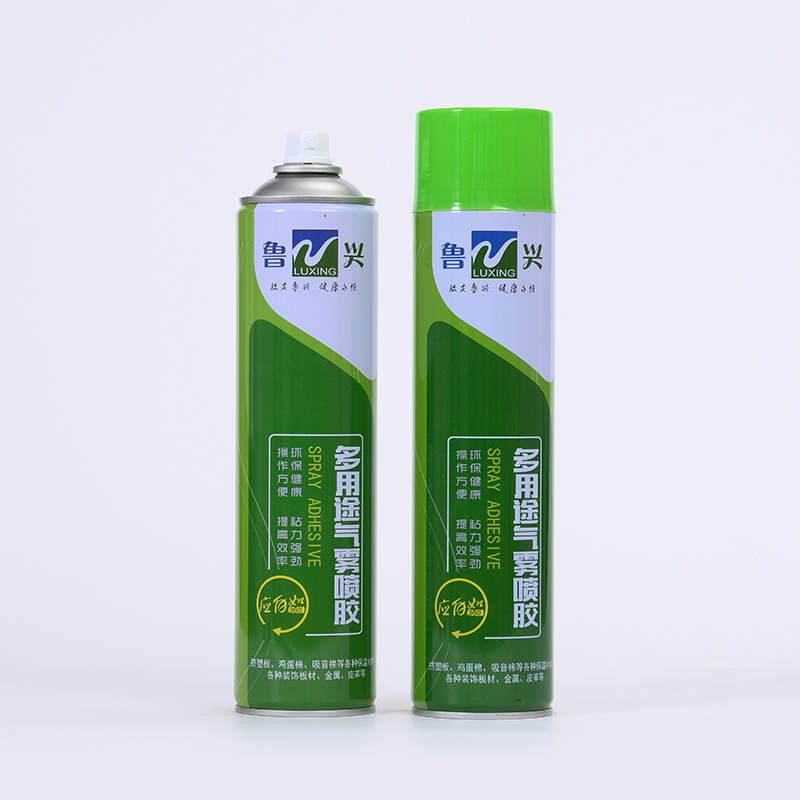
You cannot judge an adhesive solely by looking at the can. Evaluating a product requires understanding how its chemical properties translate to real-world outcomes. You need to map tack time, temperature resistance, and solids content directly to your shop's workflow.
Many professionals confuse tack time and open time. Tack time refers to the initial grab strength. It measures how quickly the glue becomes sticky enough to hold two surfaces together. Open time refers to your repositioning window. It dictates how long the glue remains workable before it dries completely.
You must align these metrics with your specific tasks. Complex tufting requires longer open times. Workers need extra minutes to adjust folds and align diamond patterns perfectly. Conversely, high-volume flat panel wrapping demands aggressive initial tack. You want the fabric to grab instantly so the piece can move down the assembly line without delay.
Thermal cycling destroys weak bonds. Consider the journey of a finished sofa. It sits in a shipping container baking in the summer sun. Later, it might rest in a sunroom directly under a skylight. These temperature swings cause adhesives to soften and eventually fail.
Standard craft glues often fail at around 100°F. For durable furniture, you must demand higher benchmarks. Look for temperature resistance ratings exceeding 120°F to 160°F. Automotive or marine applications require even higher ratings, often pushing past 200°F. Always verify the heat resistance spec on the technical data sheet (TDS) before purchasing a new spray adhesive.
Every can or cylinder of adhesive contains a mix of solids (the actual glue) and solvents (the carrier fluid). Solids content represents the percentage of glue left behind after the solvents evaporate.
Higher solids content directly improves your results. It means you get better coverage per canister. You spray less material to achieve the required bond strength. Furthermore, a higher solids percentage builds a much stronger residual bond. Products boasting 30% to 40% solids dramatically outperform cheaper alternatives containing only 15% solids.
Substrate matching defines the success or failure of your project. Applying the wrong chemical formula to a delicate material guarantees costly rework. We have organized the most common material combinations to guide your selection process.
Material Combination | Primary Requirement | Key Risk Factor | Recommended Solution |
|---|---|---|---|
Foam-to-Foam & Foam-to-Wood | High initial grab, soft glue line | Crusty seams altering cushion feel | Web spray pattern with moderate open time |
Vinyl and Faux Leather | Chemical stability against oils | Plasticizer migration turning glue to mush | Plasticizer-resistant, high-temp formulas |
Delicate Fabrics (Silk, Linen) | Surface-level adhesion only | Bleed-through and visible staining | Low-soak formulas, extended flash-off periods |
Bonding foam requires a delicate balance. You need high initial grab to hold bulky cushions together quickly. However, the final glue line must remain soft. If the adhesive dries rigid, the end user will feel a hard ridge running through the cushion. Always use a web spray pattern here to prevent the glue from soaking into the open foam cells.
Synthetic leathers contain plasticizers. These chemicals keep the vinyl soft and pliable. Unfortunately, they also migrate into standard adhesives and dissolve them. A bond might feel strong on day one, but it will turn into a greasy liquid three months later. You must specify plasticizer-resistant formulations when working with any vinyl product.
Materials like silk, linen, and thin cotton present a massive bleed-through risk. If the adhesive penetrates the weave, it permanently stains the visible face of the fabric. To prevent this, choose low-soak formulations. You must also allow extended flash-off times. Wait until the glue feels completely tacky and dry to the touch before mating the fabric.
Regulatory agencies continually update chemical safety standards. Understanding these changes protects your business from heavy fines and supply chain disruptions. The industry has moved aggressively toward stricter environmental compliance over the last decade.
Standards imposed by the California Air Resources Board (CARB) and the Ozone Transport Commission (OTC) heavily restrict volatile organic compounds (VOCs). These compounds contribute to smog and indoor air pollution. Many traditional solvents used in legacy glues now exceed legal VOC limits in various regions. Manufacturers must adapt to these shifting regulations to legally sell and use these products.
Historically, industry veterans expressed skepticism about eco-friendly glues. Early iterations of compliant formulas often suffered from weak shear strength and painfully slow drying times. However, modern chemical engineering has solved these issues. Today's low VOC spray adhesive utilizes advanced synthetic polymer formulations. These modern blends achieve massive shear strength while remaining fully compliant with CARB and OTC regulations. You no longer have to sacrifice bond integrity to meet legal standards.
Transitioning to safer chemicals provides significant secondary benefits. Improved indoor air quality drastically reduces worker fatigue, headaches, and respiratory complaints. It also lowers your facility's operational burden. Highly volatile traditional glues require extreme industrial ventilation systems and strict fire suppression protocols. Lowering your VOC footprint simplifies compliance and creates a safer, more productive factory floor.
Common Mistake: Assuming compliant adhesives dry precisely like traditional ones. Always test the flash-off time of a newly sourced compliant glue, as polymer-based formulas often require a slightly different curing window.
As your production volume grows, buying individual aerosol cans from a retail hardware store becomes a massive financial drain. Smart sourcing scales with your operational demands. You must recognize the precise moment to shift your procurement strategy.
Small restoration shops rely on aerosol cans for convenience. However, a distinct breakeven point exists. Once your shop consumes multiple cases of cans per week, you must transition to bulk systems. Pressurized bulk cylinders drastically reduce the cost per ounce. They also minimize hazardous waste disposal fees associated with empty cans. When your volume reaches industrial levels, exploring OEM manufacturing becomes the most profitable path.
High-volume operations gain incredible leverage through private label programs. It transforms a simple consumable into a strategic asset.
Brand Authority: Supplying branded adhesive alongside ready-to-assemble furniture kits builds trust. B2B supply lines prefer purchasing a cohesive, branded ecosystem rather than generic third-party supplies.
Custom Formulations: When you partner directly with a manufacturer, you dictate the chemical properties. You can dial in exact tack times suited for your specific assembly line. You can request specific VOC profiles to meet local regulations. This customization ensures the product behaves perfectly within your proprietary workflow.
By leveraging a reliable private label spray adhesive, you secure cost control, brand consistency, and a custom-tailored product.
Selecting the right manufacturing partner requires due diligence. Do not base your decision solely on the lowest price. Evaluate their Minimum Order Quantities (MOQs) to ensure they match your storage capacity. Demand transparency regarding their quality control testing. Ask for batch testing reports showing shear strength and heat resistance consistency. Finally, assess their supply chain transparency. A great partner guarantees steady deliveries even during global chemical shortages.
Even the most expensive glue will fail if applied incorrectly. Human error and poor environmental controls account for the vast majority of bond failures. Implementing strict application protocols protects your materials and your reputation.
Dust, dirt, and moisture serve as barrier layers. If you spray glue over sawdust, the glue bonds to the dust, not the wood. Ambient temperature also plays a critical role. Applying glue in a freezing workshop prevents the solvents from flashing off properly. Always maintain a clean, dry surface. Keep your workshop temperature between 65°F and 80°F for optimal curing.
Evidence-based best practices dramatically improve bond strength. Follow these core rules on the shop floor:
Maintain Distance: Hold the spray gun or can a consistent 8 to 12 inches away from the substrate. Spraying too close causes heavy puddling. Spraying too far causes the glue to dry in the air before hitting the material.
Overlap Strokes: Apply the glue in smooth, sweeping motions. Overlap each pass by 50% to ensure even coverage.
Two-Sided Coating: For high-stress areas like curved chair backs, you must apply a two-sided coat. Spray both the fabric and the frame. Let them flash off, then press them together. This creates a permanent, web-locked bond.
Rushing the process causes catastrophic failures. Solvents must evaporate (flash off) before you mate the surfaces. If you press the fabric into the foam while the glue is still wet, you trap those solvent gases inside. The bond will feel weak, and the trapped gases will eventually cause delamination. Always use the knuckle test: touch the sprayed adhesive with your knuckle. It should feel aggressively sticky but transfer zero wet glue to your skin. Only then should you mate the materials.
Choosing the correct adhesive requires a structured, logical approach. You must move past generic recommendations and evaluate the chemistry against your specific operational needs. Start by defining your exact materials to avoid plasticizer migration and fabric staining. Next, determine your regional compliance needs to ensure uninterrupted production. Select the appropriate spray pattern—almost always a web spray for upholstery—to maintain cushion flexibility. Finally, choose the procurement scale that matches your volume, whether it involves bulk cylinders or branded private label solutions.
Never commit to a massive bulk purchase without validating the product first. We highly encourage testing a sample on scrap materials under your actual shop conditions. Evaluate the tack time, perform a heat resistance test, and confirm the finish remains soft. Contact a chemical specialist today or request technical data sheets (TDS) to verify specifications before finalizing your production lines.
A: Tack time and cure time are very different. Most formulas become tacky and ready to mate within 1 to 5 minutes. However, a full structural cure typically takes 24 to 48 hours. You should avoid putting heavy stress on the newly upholstered piece until this full cure window passes.
A: No. Standard indoor furniture adhesives will fail rapidly in a vehicle. Automotive interiors regularly experience temperatures exceeding 160°F when parked in direct sunlight. You must use specialized, extreme high-temp formulas specifically designed for headliners to prevent the fabric from sagging.
A: Bleed-through usually happens for two reasons. First, you might be using a mist-spray instead of a web-spray pattern, allowing the glue to penetrate the weave. Second, you might be mating the fabric too early. You must allow the required flash-off time so the solvents evaporate before applying the fabric.
A: Modern compliant formulas generally match traditional products, offering a standard shelf life of 12 months. To prevent propellant degradation and formula separation, you must store the canisters in a climate-controlled environment, ideally between 60°F and 80°F, away from direct sunlight or freezing temperatures.

